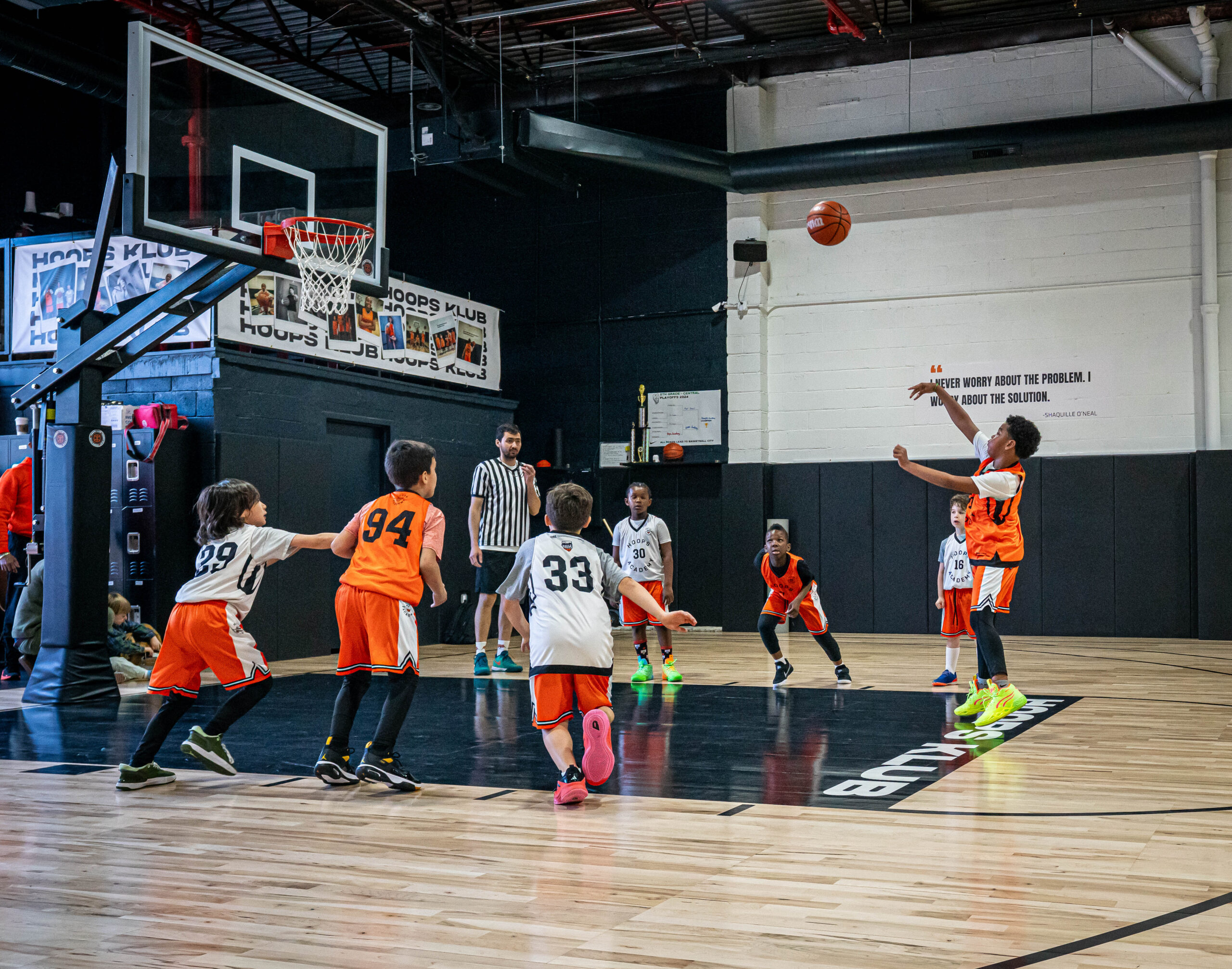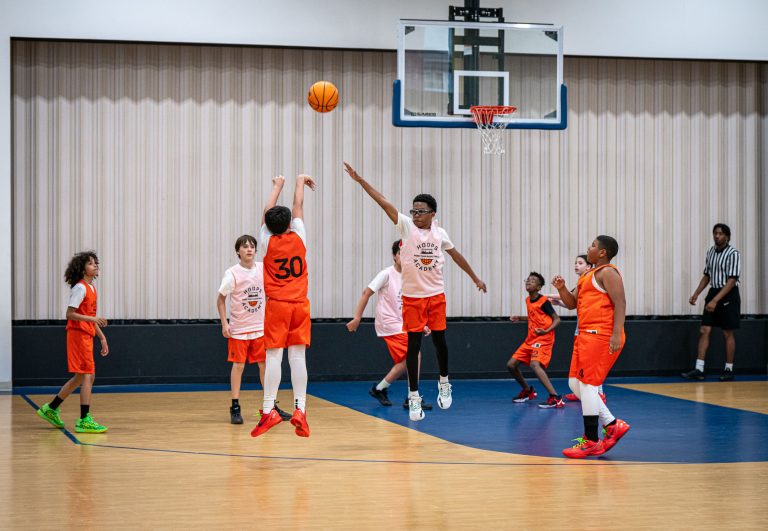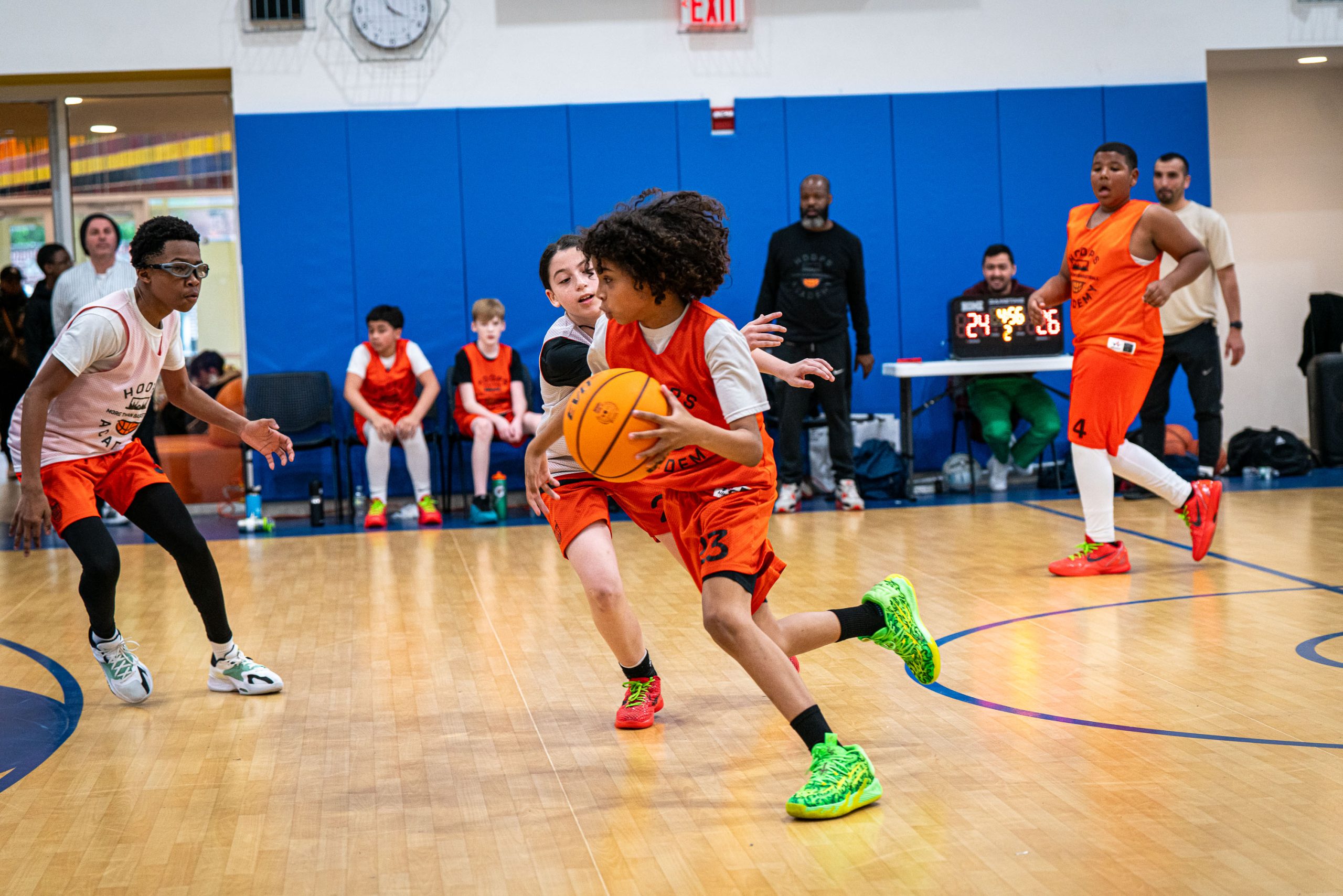
Basketball classes for kids can begin as early as ages 3 to 5 through simple games and movement activities. However, the best age to start depends on your child’s interest, coordination, confidence, and readiness for group instruction. Many children begin more structured basketball lessons around ages 6 to 8, while others start later and still develop strong fundamental skills.
If you’re wondering whether your four-year-old is ready for basketball or whether your eight-year-old is starting too late, understanding age-appropriate training can help you make the right decision.
Or maybe your child is eight, has never played organized sports, and you’re worried they’ve already fallen behind other kids.
Both situations raise the same question: What age should kids start basketball classes?
Most children can begin exploring basketball through simple games and movement activities around ages 3 to 5. Ages 6 to 8 are often a practical time to introduce more structured beginner lessons. However, there’s no single age when every child becomes ready.
The right starting point depends on your child’s interest, coordination, comfort around other children, and ability to participate in age-appropriate activities.
The American Academy of Pediatrics emphasizes that children develop the physical, mental, and social skills needed for organized sports at different rates. Younger children usually benefit more from active play than formal competition.
Before choosing a program, it helps to understand what children can realistically learn at each age and what a good first basketball experience should look like.
1. What Is the Best Age to Start Basketball?
There’s an important difference between introducing a child to basketball and enrolling them in an organized basketball league.
A preschooler can enjoy bouncing, rolling, catching, and throwing a ball without understanding basketball rules. An elementary school student may be ready to follow instructions, practice passing, and participate in simple team games.
Neither experience needs to involve competitive basketball.
Here’s a practical way to think about different starting ages.
| Child’s age | Suitable introduction | Main focus |
|---|---|---|
| 3 to 4 | Parent and child play, preschool movement classes | Running, rolling, catching, throwing |
| 5 to 6 | Beginner basketball activities and small group instruction | Dribbling, simple passing, coordination |
| 7 to 8 | Structured beginner classes and modified games | Ball handling, footwork, teamwork |
| 9 to 12 | Skill development classes and recreational leagues | Fundamentals, decision-making, game experience |
| 13+ | Beginner or intermediate training based on experience | Skill progression, conditioning, game understanding |
These are general examples, not strict enrollment requirements or developmental milestones.
Starting early doesn’t mean starting competitively
A four-year-old learning to catch a soft basketball is participating in a useful introductory activity, even if they can’t dribble consistently.
At that age, basketball should feel like a game.
By comparison, an eight-year-old might be interested in learning how to dribble while moving, pass to a teammate, or play a short modified game.
Both children are learning basketball, just at different stages.
The USA Basketball and NBA youth guidelines recommend developmentally appropriate instruction, equipment, and playing conditions. They also discourage early specialization and excessive competitive demands.
The goal for younger children isn’t to become competitive players as quickly as possible. It’s to become comfortable with movement, learn basic skills, and enjoy returning to the court.
2. Is Age 4 Too Early to Start Basketball Classes?
No, age four isn’t necessarily too early to try a basketball class. It may, however, be too early for a traditional practice built around drills, rules, and competitive games.
A class for four-year-olds should look different from a session for children in third or fourth grade.
Imagine two programs.
In the first, children stand in lines waiting to shoot at a regulation-height basket. The coach explains several steps, corrects shooting technique, and expects everyone to follow the same drill.
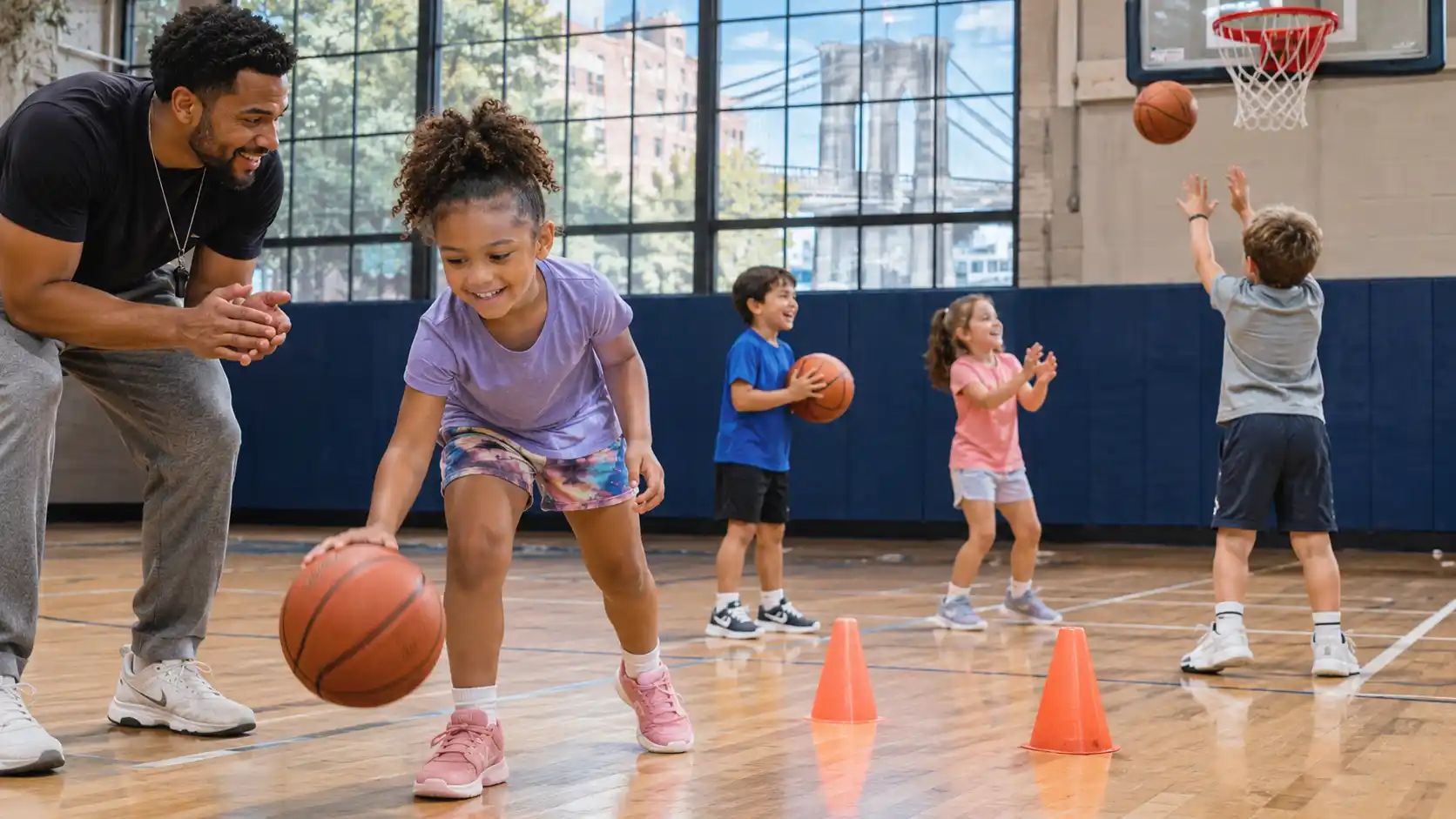
In the second, children use lightweight balls and lower baskets. They play passing games, follow simple movement instructions, and practice rolling or bouncing the ball between activities.
The second environment is generally better suited to preschool beginners.
What should a basketball class for four-year-olds include?
A suitable preschool session might involve:
-
Rolling a ball toward a target.
-
Throwing and catching with a parent or coach.
-
Trying to bounce a ball while standing still.
-
Moving between cones or floor markers.
-
Shooting at a low basket.
-
Taking turns in simple group games.
These activities introduce basketball movements without expecting advanced coordination.
The coach should demonstrate skills visually, keep explanations simple, and allow children to participate at different levels.
What if a four-year-old can’t dribble?
That’s normal.
Dribbling requires several abilities to work together. A child must coordinate their hand movements, control how hard they push the ball, judge its bounce, and maintain balance.
For a preschool beginner, controlling one bounce and catching the ball can be a useful starting activity.
A child who repeatedly drops the basketball isn’t necessarily struggling. They may simply be learning a movement they haven’t practiced before.
New York Hoops Academy offers an introductory Pre-K basketball program in Downtown Brooklyn and Fort Greene that emphasizes playful activities, coordination, and basic basketball movements.
Parents should confirm the current age groups and session details before registering, since preschool schedules can change.
3. Five Signs Your Child May Be Ready for Basketball Lessons
A child’s birthday offers less useful information than observing how they respond to activities.
You don’t need to test your child like a competitive athlete. Instead, consider these everyday signs of readiness.
They show curiosity about basketball
Perhaps your child enjoys trying to score, watches older children play, or frequently asks for a basketball.
Interest matters because children are more willing to practice activities they enjoy.
However, interest doesn’t need to mean enthusiasm for a full class. Some children love playing basketball with a parent but feel unsure about participating in a group.
They can engage with short instructions
Young beginners don’t need to memorize rules.
Being able to respond to a simple request such as “roll the ball to me” or “stop when I say freeze” can make group activities easier.
Some children need visual demonstrations, repeated reminders, or extra time. An appropriate beginner class should accommodate that.
They enjoy moving and experimenting
Running, jumping, changing directions, throwing, and catching are useful foundations for basketball.
A child doesn’t need to perform these movements perfectly. A willingness to explore them is enough for many introductory activities.
They can begin taking turns
Basketball involves sharing equipment and cooperating with other players.
Children who are beginning to understand turn-taking may find group lessons easier, although waiting and sharing are also skills they can learn during class.
They feel comfortable enough to try
Some children enter a gym confidently. Others need to watch from the sidelines before participating.
A hesitant child may still be ready if the program offers a welcoming introduction and doesn’t pressure them to join every activity immediately.
A useful question for parents is not “Can my child already play basketball?” but “Would my child enjoy learning basketball in this environment?”
4. What Should Kids Learn at Different Ages?
Basketball development works best when instruction gradually becomes more challenging.
Teaching advanced skills before children can control basic movements often creates frustration.
Ages 3 to 5: Movement before technique
At this stage, activities should introduce the ball while building confidence in fundamental movements.
Useful activities include rolling, catching, balancing, tossing, and exploring how the basketball bounces.
Coaches can introduce simple language such as pass, bounce, stop, and shoot.
A child may learn to recognize a basketball court or understand that the ball goes into the hoop, but formal game rules aren’t necessary.
Ages 6 to 8: Understanding the fundamentals
As children become more comfortable with group instructions, lessons can gradually introduce:
-
Dribbling with either hand.
-
Chest passes and bounce passes.
-
Catching while moving.
-
Stopping with balance.
-
Shooting near the basket.
-
Moving into open space.
-
Basic defensive positioning.
The emphasis should remain on learning, rather than performing every skill correctly.
The USA Basketball and NBA recommendations for ages 7 to 8 include size 5 basketballs and eight-foot baskets where facilities permit. These modifications help keep equipment appropriate for younger players.
Ages 9 to 12: Connecting skills to game situations
Children with a foundation in basketball can begin learning how skills work together.
For example, rather than simply practicing a chest pass, a coach might teach a player when to pass, where to move afterward, and how to receive the ball again.
This is also a useful stage for introducing small-sided games, defensive movement, and basic decision-making.
Beginners at these ages should still receive fundamental instruction. Being older doesn’t mean a child should skip the basics.
Ages 13 and older: Learning at the right level
Teenagers who are new to basketball may feel uncomfortable joining a group where others have played for years.
But beginning later doesn’t prevent someone from learning the sport.
A suitable program should assess their current skills, introduce fundamentals where necessary, and gradually build toward more challenging activities.
The important distinction is between chronological age and basketball experience.
5. Does Starting Basketball Earlier Make a Child a Better Player?
Starting at age four doesn’t automatically make someone a better basketball player than a child who begins at age nine.
An early introduction may give children more opportunities to become familiar with the ball and discover whether they enjoy the sport. But early participation alone doesn’t guarantee stronger skills later.
A child who spends several years attending lessons without enjoying them may become less interested in practicing.
Another child might begin later, develop a strong interest, and make steady progress through regular, enjoyable participation.
Neither outcome can be predicted simply from the starting age.
Why playing different sports can help
Basketball uses skills that children can also develop through other physical activities.
Soccer encourages changing direction and moving through space. Gymnastics introduces balance and body control. Running games can develop reactions and movement confidence.
The USA Basketball and NBA guidelines encourage children to experience multiple sports and recommend delaying basketball-only specialization until at least age 14.
Parents don’t need to fill every afternoon with training to support a child’s development.
Playing outdoors, riding a bicycle, swimming, and enjoying unstructured games can all be part of a healthy childhood.
What matters more than starting early?
A positive learning environment, consistent opportunities to practice, adequate rest, and the child’s own motivation are more useful considerations than trying to gain an early competitive advantage.
A beginner who feels comfortable making mistakes is also more likely to try unfamiliar skills.
That’s why the atmosphere of the first basketball class matters as much as the activities.
6. Easy Basketball Activities Parents Can Try at Home
You don’t need a basketball court, expensive equipment, or professional coaching experience to introduce a young child to basketball.
A small ball, enough safe space to move, and a few simple games can make a useful starting point.
For preschoolers, the goal should be exploration rather than a formal workout. Keep activities short, demonstrate each movement, and stop when your child loses interest.
Activity 1: Bounce and catch
Best for: Preschool and early elementary beginners.
Give your child a lightweight, appropriately sized ball.
Ask them to bounce it once and catch it with both hands.
Once that becomes comfortable, they can try bouncing the ball twice before catching it.
This activity introduces hand control, tracking, and timing without requiring continuous dribbling.
If the ball frequently rolls away, that isn’t a problem. Recovering it and trying again is part of learning.
Activity 2: Red light, green light
Best for: Children beginning to understand simple instructions.
Choose a safe playing area.
When you say “green light,” your child moves forward while carrying or bouncing the ball.
When you say “red light,” they stop.
As they gain control, introduce dribbling while moving.
This game encourages children to listen, control their movement, and become familiar with the basketball.
Activity 3: Pass to the target
Best for: Beginner coordination and passing practice.
Stand a short distance from your child and gently pass the ball.
Start with a rolling pass if catching is difficult.
Then try a two-handed chest pass or a bounce pass.
You can also use a large target, such as a marked area on a wall or a basket on the ground, where safe.
The goal is to help your child understand how the ball travels and how to direct it.
Activity 4: Close-range shooting
Best for: Children interested in scoring.
Use a low, adjustable hoop and an age-appropriate basketball.
Let your child stand close enough to shoot comfortably.
Avoid asking them to shoot from long distances. Children sometimes compensate for a basket that’s too high by throwing the ball awkwardly.
Success doesn’t have to mean making every shot.
A controlled throw toward the basket is a useful achievement for a beginner.
Activity 5: Follow the leader
Best for: Children who prefer moving games.
Create a simple obstacle course with cones or floor markers.
Lead your child through different movements, such as walking around markers, stopping, turning, and carrying the ball to a target.
As they become more comfortable, introduce dribbling or passing between stations.
This activity can be especially useful for children who aren’t ready to focus exclusively on basketball techniques.
A simple beginner practice example
For a young child who wants to play at home, you could try this optional 15-minute activity plan.
| Activity | Example time |
|---|---|
| Moving and warming up |
3 minutes |
| Bounce and catch |
3 minutes |
| Passing game |
3 minutes |
| Shooting at a low basket |
4 minutes |
| Child’s favorite activity |
2 minutes |
This is an example play session, not a prescribed training duration. Shorten, change, or skip activities based on your child’s interest and comfort.
The strongest sign of success might simply be that your child asks to play again tomorrow.
7. What Should Parents Look for in a Beginner Basketball Class?
Not every basketball program is designed for children who have never played before.
Some programs emphasize recreational learning. Others focus on competitive performance, advanced skills, or preparation for travel teams.
Choosing the right environment can make a considerable difference to a child’s first experience.
Coaches who understand young beginners
A coach working with preschoolers needs a different approach from someone training competitive teenagers.
Look for instructors who explain skills simply, demonstrate movements, and respond patiently when children need reminders.
Young children may struggle with directions that involve several actions.
For example, telling a beginner to dribble to a cone, change hands, make a pass, and then cut toward the basket could be overwhelming.
Breaking that sequence into smaller activities makes it easier to learn.
Children spend more time moving than waiting
A basketball class can become frustrating when children spend much of the session standing in lines.
Look for activities that involve frequent ball touches, small groups, and opportunities for everyone to participate.
Equipment fits the child’s age and abilities
Ask whether the program uses appropriately sized basketballs and adjustable hoops.
A full-size adult basketball may be difficult for a small child to control.
Likewise, expecting a young beginner to shoot at a regulation-height basket can make proper movement harder to learn.
The program welcomes children with different abilities
Beginners don’t all learn at the same speed.
Some children may be comfortable dribbling but struggle to catch passes. Others may understand instructions but need more time to develop coordination.
A suitable class should allow children to progress without embarrassment.
8. Should Beginners Choose Group Classes, Private Training, or Camps?
The best learning environment depends on the child’s experience, personality, interests, and goals.
Formal classes aren’t the only way to learn basketball.
Group basketball classes
Group instruction can introduce children to cooperating with others, sharing the ball, and learning from classmates.
For many beginners, this is a sensible place to start.
A child who enjoys meeting other kids and participating in games may respond well to group lessons.
Parents can explore the academy’s basketball programs in Downtown Brooklyn and Fort Greene to compare introductory and more structured options.
Parent and child basketball sessions
Some young children feel more comfortable practicing with a familiar adult.
Parent and child programs can help families participate together while introducing basketball fundamentals.
New York Hoops Academy also offers Parent & Kid basketball sessions for specified elementary school age groups.
This option may suit families who want a shared activity rather than independent instruction. Check the program’s current grade eligibility before registering.
Private basketball training
Private instruction may be useful when a child needs individual attention or wants to improve a particular skill.
For example, a school-age beginner who finds group drills overwhelming might benefit from practicing basic dribbling and passing with a coach.
However, private coaching isn’t automatically necessary for young children. Many beginners learn well through recreational play and group programs.
Parents can compare options through the academy’s private basketball training programs.
Basketball camps and clinics
Camps can provide opportunities to practice basketball while meeting other children and participating in organized activities.
They may be a good fit for children who already enjoy group play and can comfortably participate in the camp’s daily schedule.
Before enrolling a younger child, ask about supervision, breaks, non-basketball activities, and how participants are grouped.
The academy offers basketball camps and clinics in Brooklyn with age- and skill-based groupings. Individual sessions and eligibility can vary.
For a child attending their first basketball program, a shorter introductory class may be a more comfortable option than immediately committing to a full-day camp.
9. How Much Basketball Practice Is Appropriate for Young Kids?
More practice doesn’t necessarily mean better development.
A child’s schedule should leave room for school, rest, family time, friendships, and other physical activities.
For preschoolers, informal play and brief introductory activities are generally more appropriate than demanding training schedules.
Older beginners may participate in organized instruction, but the amount should match their age, interest, and other commitments.
What do the youth basketball guidelines recommend?
The NBA and USA Basketball provide participation recommendations for organized basketball, including the following examples.
|
Age |
Recommended practices per week |
Recommended practice duration |
|---|---|---|
| 7 to 8 |
1 |
30 to 60 minutes |
| 9 to 11 |
2 |
45 to 75 minutes |
| 12 to 14 |
2 to 4 |
60 to 90 minutes |
Source: USA Basketball Youth Basketball Guidelines. These recommendations relate to organized basketball participation and are not minimum requirements or prescriptions for every child.
Families should also consider any additional sports and recreational commitments.
Children who appear unusually tired, become distressed about attending, or repeatedly complain of discomfort may need a change in activity or schedule.
Persistent or recurring pain should be assessed by a qualified healthcare professional rather than treated as a normal part of training.
Leave time for unstructured play
A basketball class teaches skills in a structured setting, but children also benefit from being able to experiment independently.
They might invent shooting games, practice passing with a sibling, or simply enjoy bouncing a ball outside.
These experiences allow children to explore movement without needing constant instruction or correction.
10. Common Mistakes Parents Make When Introducing Basketball
Parents naturally want to help their children succeed. Sometimes, however, well-intentioned decisions can make the sport less enjoyable.
Comparing children of the same age
Two seven-year-olds may have very different coordination, confidence, and previous sports experience.
One might dribble confidently while another is still learning how to control the ball.
Comparing their performance doesn’t tell you everything about their ability to learn.
A more useful approach is to notice each child’s progress over time.
Correcting every mistake
Imagine a parent repeatedly reminding a young child to keep their elbow straight, bend their knees, and use the correct shooting motion.
The instructions may be technically relevant for an older player, but too many corrections can overwhelm a beginner.
Younger children often learn better through clear demonstrations, simple cues, and encouragement.
Moving into competitive basketball too quickly
A child who enjoys shooting at home may not yet want to participate in organized games.
Competitive leagues involve following rules, dealing with opponents, and responding to the pace of play.
A gradual transition through introductory classes and modified games may be more appropriate.
Treating every practice as a performance test
Children should be able to make mistakes without feeling they’ve disappointed their parents.
Instead of asking how many baskets your child scored, consider asking what they enjoyed or what new activity they tried.
Ignoring the child’s interests
Some children love basketball immediately. Others prefer soccer, swimming, gymnastics, or noncompetitive activities.
Trying basketball should be an opportunity to discover an interest, not an obligation to continue indefinitely.
If your child feels pressured by organized sports, their enjoyment may decrease.
11. Questions Parents Commonly Ask Before Starting Basketball
Can a three-year-old start basketball?
A three-year-old can begin exploring basketball through simple activities such as rolling, throwing, catching, and playing with a soft ball.
Formal basketball training is usually unnecessary at this age. A play-based preschool program may be appropriate for some children, provided activities are developmentally suitable and properly supervised.
Is five a good age to start basketball lessons?
Five can be a suitable age for introductory basketball lessons focused on movement, coordination, and simple games.
Children shouldn’t be expected to understand complex rules or perform advanced basketball techniques.
Choose a program that emphasizes enjoyable participation rather than competition.
Is seven too late to start basketball?
No. Seven is a reasonable age to begin learning basketball fundamentals.
Children can start with dribbling, passing, catching, footwork, and modified games without prior basketball experience.
Can a ten-year-old start basketball with no experience?
Yes. A ten-year-old can join a beginner-level basketball program.
The most important factor is selecting a group that matches their experience. A beginner may feel more comfortable in a fundamentals class than a competitive program designed for experienced players.
Do kids need to know how to dribble before joining basketball classes?
Usually not for a genuine beginner program.
Learning basic dribbling is often one of the reasons children join basketball classes.
However, requirements differ between introductory lessons, developmental leagues, and competitive teams. Check the eligibility details before enrolling.
Are basketball classes good for shy kids?
They can be, particularly when the program is welcoming and allows children to participate gradually.
Some children enjoy small-group activities after they become familiar with the coach and other participants.
Others may prefer parent-supported play initially. A child’s comfort and willingness to participate should guide the choice.
Should my child learn basketball at home before taking lessons?
Home practice can introduce basic movements and build familiarity with the ball, but it isn’t a requirement for most beginner classes.
Children who have never held a basketball can still begin with suitable introductory instruction.
How do I know if my child is enjoying basketball?
Look beyond what your child says immediately after practice.
Do they talk about the activities they played? Are they interested in returning? Do they voluntarily pick up a ball at home?
Some children may be quiet after class but still enjoy participating.
If your child consistently seems unhappy, ask what they dislike and whether a different activity or program would be a better fit.
12. Finding the Right Basketball Classes for Kids in Brooklyn and NYC
If your child is interested in basketball, the next step is to find a program that matches their age, experience, and comfort level.
New York Hoops Academy provides youth basketball opportunities across several New York City locations, with programs ranging from preschool introductions to structured skill development.
Families can explore the following options:
-
Downtown Brooklyn and Fort Greene basketball programs for beginner classes, preschool activities, camps, and other youth programs.
-
Greenpoint basketball programs for introductory and developmental basketball opportunities.
-
Roosevelt Island basketball programs for information about youth activities and future sessions. The page currently indicates that its schedule is temporarily unavailable.
-
Youth developmental basketball league for children ready to combine fundamentals with game experience.
-
After-school basketball programs for eligible school-age children.
For parents who aren’t sure which option is suitable, browsing the complete New York Hoops Academy locations directory is a useful starting point.
Ask about the appropriate age group, class format, scheduling, registration requirements, and opportunities for beginners before committing to a program.
Give Your Child a Positive First Experience With Basketball
There’s no need to rush into competitive basketball or wait until your child has mastered the fundamentals.
For younger children, a positive introduction might begin with catching a ball, learning to take turns, and having fun with other kids.
As they grow, suitable basketball classes can introduce new skills, teamwork, and opportunities to participate in games.
What matters most is finding a learning environment where your child feels comfortable, has opportunities to improve, and wants to keep playing.
Explore basketball classes for kids at New York Hoops Academy and find a suitable starting point for your young player.