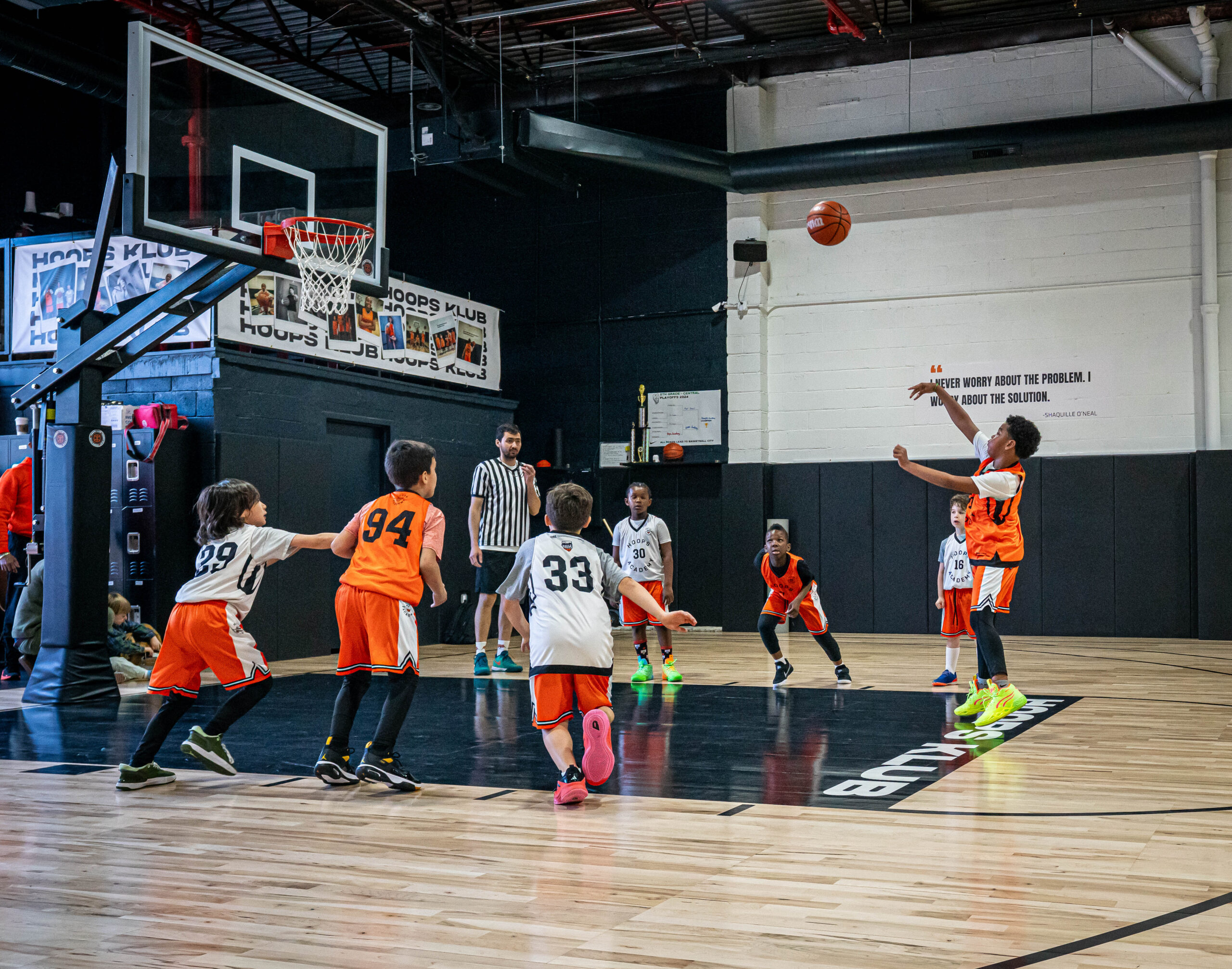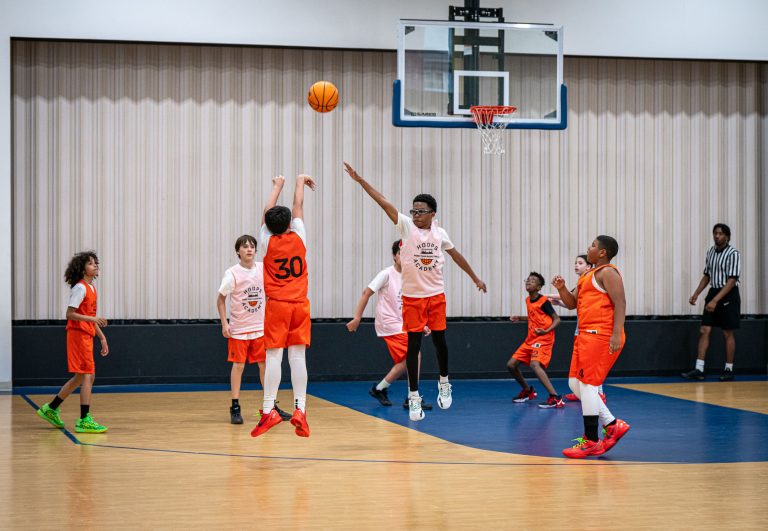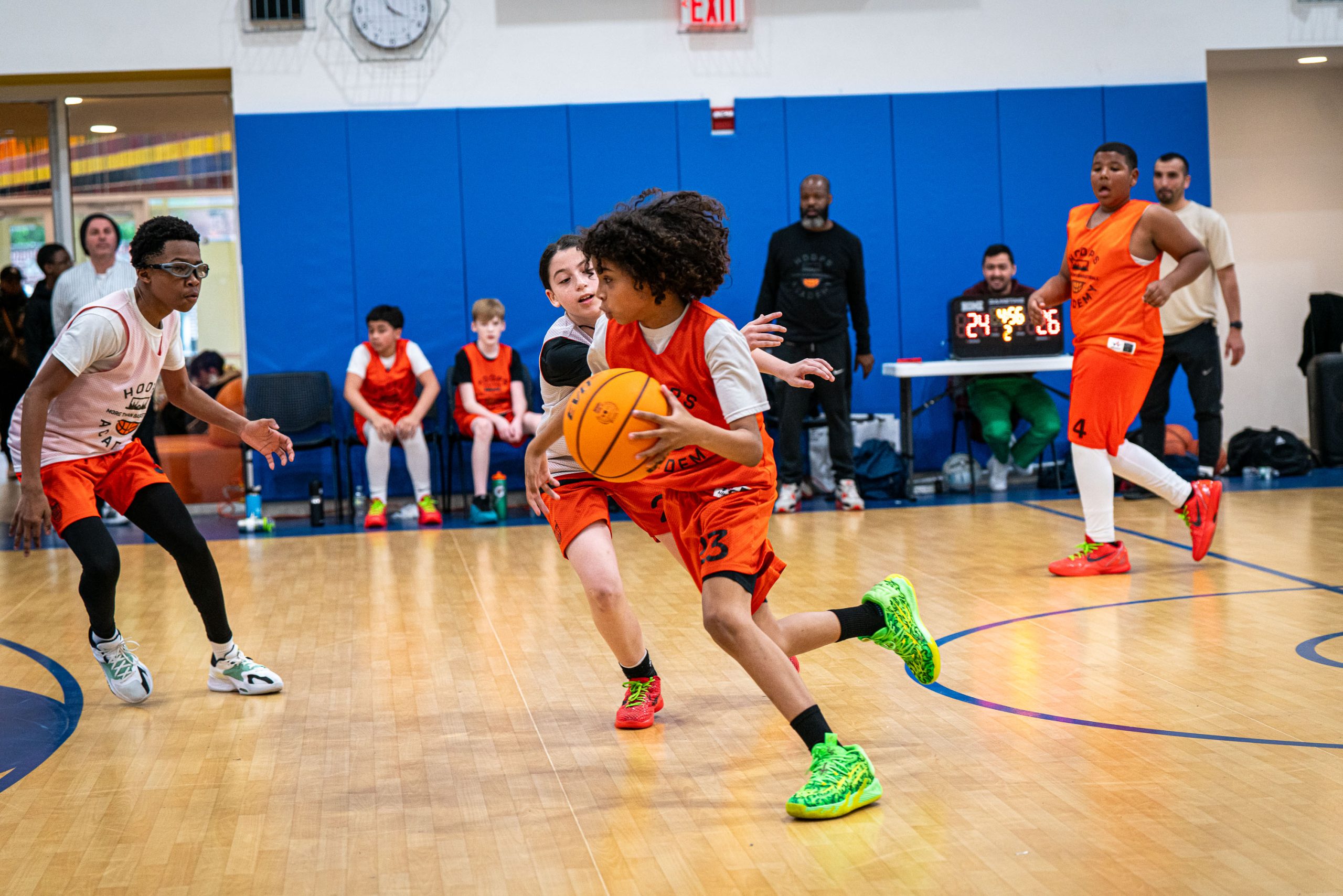
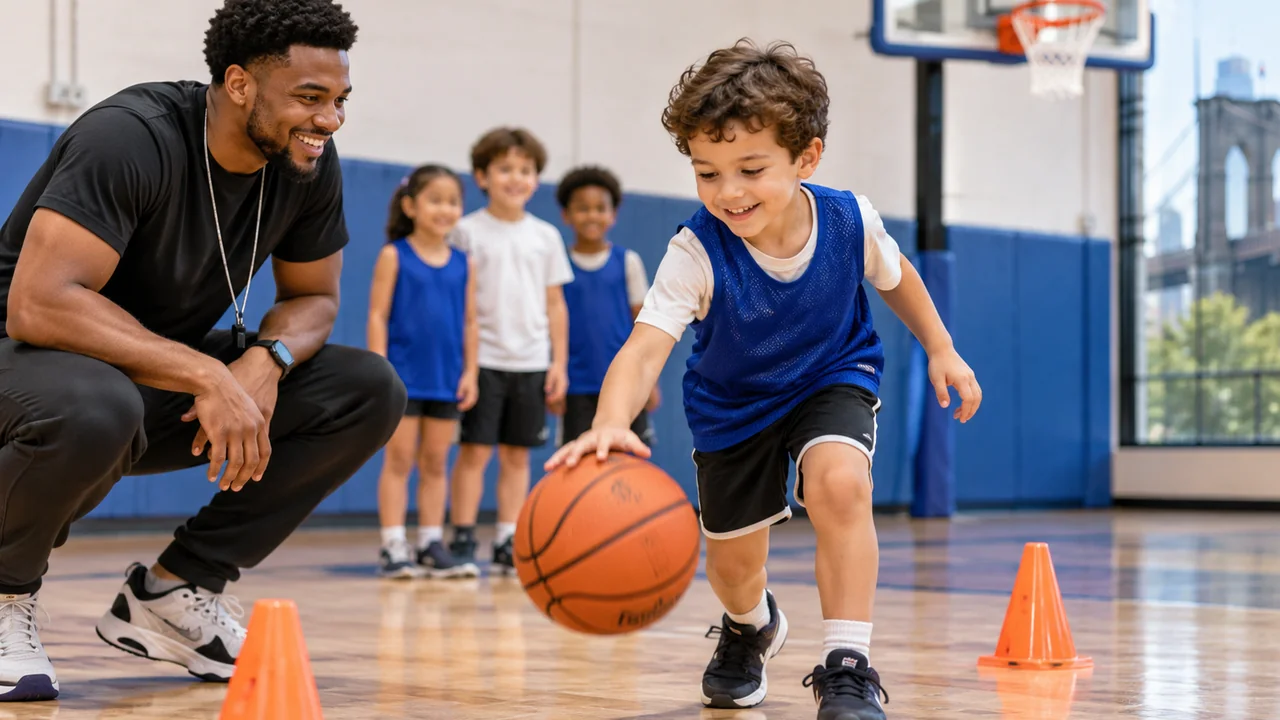
Basketball for 6 year olds should start with simple skills, fun games, and plenty of opportunities to move. At this age, children don’t need complicated drills, competitive pressure, or perfect shooting technique. They need activities that help them become comfortable with a basketball while enjoying the experience.
If your six-year-old is just getting started, you might notice that dribbling is difficult, catching passes feels awkward, or their attention shifts after only a few minutes. That’s a normal part of learning a new sport.
A good first basketball practice introduces basic movements, including bouncing, passing, catching, shooting, running, and changing direction. Instead of focusing on how many baskets a child makes, parents can look for small improvements in coordination, participation, and confidence.
The American Academy of Pediatrics’ sports readiness guidance explains that children develop at different rates and that sports involving complex coordination, such as basketball, should be modified for younger players.
This guide covers realistic basketball skills for six-year-olds, seven enjoyable games, a beginner practice routine, and practical ways parents can encourage progress without making basketball feel like homework.
Table of Contents
-
Is Six a Good Age to Start Basketball?
-
What Basketball Skills Should a 6-Year-Old Learn?
-
Choosing the Right Basketball and Hoop
-
Seven Fun Basketball Games for 6 Year Olds
-
An Easy 20-Minute Basketball Practice Plan
-
How Often Should Six-Year-Olds Practice?
-
Teaching Children Who Struggle With Dribbling or Catching
-
Common Mistakes During First Basketball Practices
-
Safety Tips for Young Basketball Beginners
-
How to Recognize Progress Without Comparing Kids
-
When to Consider Beginner Basketball Classes
-
Questions Parents Ask About Basketball at Age Six
Is Six a Good Age to Start Basketball?
Yes. Six can be a good age to introduce basketball, especially when activities are designed for beginners.
However, being old enough to try basketball doesn’t mean a child is ready for full-court games, complicated rules, or competitive team practices.
The American Academy of Pediatrics explains that many children between ages six and nine have the basic movement skills needed for simple organized sports. Activities requiring quick decisions, advanced hand-eye coordination, and complex teamwork may still be challenging.
That’s why basketball for 6 year olds works best when the rules, equipment, and expectations are adjusted to suit the child.
What can you realistically expect from a six-year-old?
A child who has never played basketball might initially:
-
Bounce the ball once and catch it rather than dribble continuously.
-
Use both hands to throw a basketball toward the hoop.
-
Find it difficult to catch a pass while moving.
-
Chase the ball instead of understanding court positioning.
-
Forget instructions during a game.
-
Enjoy shooting but become frustrated when asked to repeat drills.
These behaviors don’t automatically suggest a problem. Children develop coordination, attention, confidence, and game understanding at different speeds.
Parents who are uncertain about readiness can explore our guide on what age kids should start basketball classes.
The most important goal at six
A successful first season isn’t necessarily one where a child scores frequently or learns advanced moves.
It’s one where the child feels comfortable trying new skills, understands a few basic concepts, enjoys playing with others, and wants to return.
The World Association of Basketball Coaches’ Mini-Basketball Manual specifically recommends enjoyable, varied activities for children ages five to seven rather than repetitive technical instruction.
What Basketball Skills Should a 6-Year-Old Learn?
The best beginner basketball skills are the ones children can practice through games.
Basketball for 6 year olds should focus on a small set of fundamentals before introducing more complicated techniques.
1. Ball handling and basic dribbling
Dribbling involves pushing the basketball against the floor and controlling its bounce.
For beginners, start with a single bounce.
Ask your child to stand with slightly bent knees, push the ball toward the ground, and catch it when it returns.
Once that feels comfortable, encourage two or three controlled bounces.
Eventually, they can experiment with continuous dribbling and moving slowly while bouncing.
A helpful coaching cue is “Push the ball down, then get your hand ready.”
Avoid overwhelming children with detailed instructions about finger placement, wrist movement, and posture all at once.
2. Catching and passing
Passing introduces cooperation and helps children learn how to direct the basketball toward another person.
Begin by standing close together.
Try three simple activities:
-
Rolling the ball between partners.
-
Throwing gentle two-handed chest passes.
-
Bouncing the ball once toward a partner.
Watch whether your child can track the ball and prepare their hands before it arrives.
If catching is difficult, start with a soft, lightweight ball and slow throws. A child who’s worried about being hit by the ball may feel more comfortable rolling it first.
3. Shooting near the basket
Scoring is often an exciting part of basketball for young children.
However, shooting from too far away can encourage awkward throwing movements because children need extra strength to reach the hoop.
Start close to a lower basket.
Let your child practice aiming, extending their arms, and releasing the ball upward.
Don’t worry about teaching a perfect jump shot. Learning to direct the ball toward a reachable target is enough for many beginners.
4. Balance, stopping, and changing direction
Basketball involves more than handling the ball.
Children also need opportunities to run, stop, turn, jump, and move around other players safely.
Games such as following a leader, moving between floor markers, and freezing when a coach calls stop introduce these movements naturally.
5. Sharing, teamwork, and simple game decisions
A six-year-old doesn’t need to memorize offensive plays.
Start with two simple ideas:
When I have the ball: I can bounce it, pass it, or try to score.
When my teammate has the ball: I can move to an open space and get ready to catch.
Children may need repeated demonstrations before these concepts become familiar.
For an introduction to the rules children will gradually encounter, see our youth basketball rules guide.
Choosing the Right Basketball and Hoop
Using equipment designed for adults can make basketball unnecessarily frustrating for younger players.
A six-year-old may struggle to control a heavy basketball or shoot toward a regulation-height basket.
The World Association of Basketball Coaches recommends size 3 or size 5 basketballs and baskets approximately 6 to 8 feet high for children ages five to seven.
USA Basketball’s formal recommendations for the next age group, seven to eight, specify a size 5 basketball and an 8-foot basket where possible. These are age-group guidelines, not mandatory requirements for every six-year-old.
| Equipment | Practical choice for a six-year-old |
|---|---|
| Basketball | Size 3 or size 5, depending on hand size and ability |
| Basket | Adjustable lower hoop, often around 6 to 8 feet |
| Shoes | Comfortable athletic shoes with suitable grip |
| Playing area | Clear, level court or supervised open space |
| Practice markers | Soft cones or flat floor markers |
A lightweight ball can be particularly useful for children who are still learning to catch.
For indoor practice, choose an appropriate ball and playing surface. Make sure there’s enough clear space and that the child is supervised.
You don’t need to purchase expensive equipment before discovering whether your child enjoys basketball.
7 Fun Basketball Games for 6 Year Olds
Traditional basketball drills aren’t always suitable for first-time players. Children may lose interest when they spend too much time waiting, listening, or repeating the same movement.
In discussions among youth coaches on Reddit, recurring challenges include mixed skill levels, short attention spans, and children struggling with basic passing or dribbling. Coaches commonly suggest short activity stations, simple games, and avoiding long lines. These are practical experiences rather than controlled research findings.
The following basketball drills for 6 year olds can be used at home, in beginner classes, or during a first team practice.
Game 1: Bounce and Catch Challenge
Skill: Ball control and hand-eye coordination
This game introduces dribbling without expecting a child to control the ball continuously.
How to play:
-
Give your child an appropriately sized basketball.
-
Ask them to bounce it once and catch it.
-
When they’re comfortable, try two bounces before catching.
-
Encourage them to experiment with either hand.
-
Celebrate controlled attempts rather than counting mistakes.
Make it easier: Let the child use both hands to bounce the ball before trying one hand.
Make it harder: Ask them to bounce twice and catch while standing in a balanced position.
This is particularly useful during a first basketball practice because beginners can succeed without already knowing how to dribble.
Game 2: Red Light, Green Light Basketball
Skill: Dribbling, listening, stopping, and body control
Children enjoy games where they respond to simple instructions.
How to play:
-
Mark a starting point and finishing point.
-
Say “green light” to begin moving forward.
-
Say “red light” to stop.
-
Repeat with changes in speed and direction.
-
Introduce dribbling once children become comfortable moving with the basketball.
Children who cannot dribble yet can carry the ball during their first attempts.
Make it easier: Begin with walking and stopping without a ball.
Make it harder: Add “yellow light” for slow dribbling.
Avoid treating mistakes as reasons for elimination. Children should remain involved throughout the activity.
Game 3: Follow the Leader Basketball Adventure
Skill: Coordination, footwork, and movement
This basketball game can be played without a hoop.
Arrange a few soft cones or flat markers in a safe area.
The adult or coach leads while the child copies different movements.
For example, players might walk around a cone, stop on a marker, take two sideways steps, and turn toward a pretend basket.
Add a basketball when appropriate. Children can carry, roll, or dribble it between markers.
Make it easier: Use fewer markers and slower movements.
Make it harder: Let the child become the leader and invent the next movement.
Giving children a turn to lead can make the game more engaging while encouraging simple decisions.
Game 4: Pass the Treasure
Skill: Passing, catching, and teamwork
For this game, the basketball becomes the treasure that players must deliver to a partner.
How to play:
-
Stand a short distance apart.
-
Pass the ball gently to your child.
-
Ask them to pass it back.
-
Introduce a target, such as a floor marker near the partner.
-
Move slightly farther apart if passing becomes comfortable.
With a small group, arrange children in a circle and encourage each player to pass to a different teammate.
Make it easier: Roll the basketball instead of throwing it.
Make it harder: Ask players to take a step into open space before receiving a pass.
Basketball for 6 year olds should make passing feel like a cooperative activity rather than a test.
Game 5: Close-Range Shooting Adventure
Skill: Shooting, aiming, and confidence
Place a child near a low basket.
Let them shoot, retrieve the ball safely, and try again.
You can turn the activity into a simple adventure by creating two or three nearby shooting spots.
Ask your child to choose where to shoot next.
Make it easier: Move closer to the hoop or lower the basket.
Make it harder: Let the child step slightly farther away while maintaining comfortable control.
Avoid asking beginners to shoot from the three-point line or forcing them to use adult shooting mechanics.
For young children, a controlled attempt can be a meaningful improvement even when the ball doesn’t enter the basket.
Game 6: Mirror the Coach
Skill: Defensive movement, balance, and reaction
This game introduces the basic idea of staying in front of another player without complicated defensive rules.
How to play:
-
Stand facing your child with enough space between you.
-
Move slowly to one side.
-
Ask your child to mirror your movement.
-
Change directions occasionally.
-
Let the child lead while you copy them.
Start without basketballs.
Keep movements controlled, avoid contact, and let children stop when they lose balance.
Make it easier: Use walking movements only.
Make it harder: Add simple sideways movements while maintaining space.
This activity helps children become familiar with defensive positioning before they’re ready for competitive games.
Game 7: Pass, Move, and Score
Skill: Teamwork, spacing, passing, and shooting
Once children understand basic passing, they can begin connecting skills.
Try a simple two-against-two activity with four children, or work with an adult and two children.
How to play:
-
Begin with two players sharing one basketball.
-
Ask the player holding the ball to pass.
-
Encourage the passer to move to an open area.
-
Let the receiving player attempt a close-range shot.
-
Rotate roles so everyone gets opportunities with the ball.
For complete beginners, start without defenders. Introduce gentle, noncontact defense only when children are comfortable.
Small-sided games can provide more opportunities to handle the ball than larger games where beginners may rarely touch it.
Parents interested in the differences between game formats can also read our guide to 3-on-3 versus full-court youth basketball.
An Easy 20-Minute Basketball Practice Plan
A first basketball practice doesn’t have to be complicated.
For basketball for 6 year olds, a short home session that changes activities before children become frustrated can be a useful starting point.
Here’s an example of a 20-minute session. It is an optional play routine, not a prescribed training duration.
| Activity | Time | Main purpose |
|---|---|---|
| Follow the Leader | 3 minutes | Warm up and movement |
| Bounce and Catch | 4 minutes | Ball control |
| Pass the Treasure | 4 minutes | Passing and catching |
| Close-Range Shooting | 4 minutes | Aiming and shooting |
| Red Light, Green Light | 3 minutes | Movement and control |
| Child’s favorite game | 2 minutes | Finish with enjoyment |
| Total | 20 minutes |
How should parents use this plan?
Start with an activity your child already enjoys.
Demonstrate the movement, allow a few attempts, and give simple feedback.
If your child is interested, continue. If they’re losing focus, switch games.
A practice may end earlier than planned, and that’s fine.
A beginner who spends a few enjoyable minutes learning to bounce and catch may have a better experience than one who is pressured to complete a longer routine.
For additional structured activities and demonstrations, explore the Jr. NBA Rookie Practice Plans. These include beginner drills, instructional videos, and practice resources focused on activity and basketball fundamentals.
How Often Should Six-Year-Olds Practice Basketball?
There’s no universal practice schedule that every six-year-old needs to follow.
The appropriate amount depends on the child’s interest, experience, energy level, other activities, and opportunities for rest.
The NBA and USA Basketball publish recommendations for organized basketball starting with the seven-to-eight age group, including one organized practice per week lasting 30 to 60 minutes.
Those recommendations should not be treated as a minimum requirement or an exact schedule for six-year-olds.
For younger beginners, regular opportunities for relaxed play may be more useful than formal workouts.
What does a reasonable weekly approach look like?
A family might choose one suitable beginner class and add occasional short games at home when the child wants to participate.
Another family might skip organized classes initially and practice through informal play in a park.
Neither approach is automatically better.
Children also benefit from different physical activities, such as running games, swimming, playground activities, or other sports.
The goal is to maintain enjoyment while allowing enough rest and time for school, family, and friendships.
Parents can learn more about supporting healthy participation in our article on helping young basketball players without pressure.
Teaching Children Who Struggle With Dribbling or Catching
One of the most common frustrations during a beginner basketball practice is that the child cannot perform a movement the adult considers simple.
Dribbling requires several actions to work together. A child must judge the basketball’s bounce, control their hands, maintain balance, and react to the ball’s movement.
Catching also requires timing and visual tracking.
These abilities aren’t identical in every six-year-old.
My child keeps losing the ball while dribbling
Start by removing the pressure to dribble continuously.
Try bouncing and catching the basketball.
Once that becomes comfortable, introduce repeated bounces while standing still.
Avoid immediately asking the child to run, change hands, and watch other players.
If a drill feels too difficult, simplify one part of the movement instead of repeating the same instruction.
My child is afraid of catching passes
Begin with rolling games or gentle throws using a soft ball.
Stand close together and demonstrate how to prepare hands for the ball.
Gradually introduce short passes as confidence develops.
Don’t surprise children with hard passes to test their reactions.
Some may need more time to become comfortable with the ball moving toward them.
My child won’t participate in a group game
A child who happily practices at home may become hesitant around other players.
For example, imagine a six-year-old who can dribble in the driveway but freezes when several children are running toward the same basketball.
The problem may not be a lack of ability. The group environment may simply feel unfamiliar or overwhelming.
Start with partner activities, allow the child to observe, and introduce small group games gradually.
Our article on how basketball can build confidence in kids discusses the role of encouragement and supportive coaching.
Common Mistakes During First Basketball Practices
Parents and beginner coaches often have good intentions but may introduce expectations that are too advanced for young players.
Expecting perfect technique immediately
Basketball for 6 year olds isn’t about mastering advanced shooting form, crossovers, or defensive schemes.
Children should first understand the purpose of a skill and become comfortable trying it.
Technical details can be introduced gradually as coordination develops.
Making children wait in long lines
A practice where eight children stand in line for one basketball gives each player very little involvement.
Instead, consider smaller groups, partner activities, or stations with several basketballs.
More opportunities to participate can help children remain interested.
Correcting every mistake
Too much feedback can turn a fun game into a frustrating lesson.
Try offering one simple instruction at a time.
Instead of explaining five things that went wrong during a pass, ask your child to watch their partner and try again.
Making every activity competitive
Young children can enjoy friendly challenges, but elimination games may leave beginners standing on the sidelines.
Avoid activities where less experienced players repeatedly lose their turn.
Cooperative challenges, personal goals, and games where everyone stays involved are often more appropriate.
Comparing children with more experienced teammates
One six-year-old might have attended basketball classes for a year. Another may be touching a basketball for the first time.
Their skills will probably look different.
Compare each child’s progress with their previous ability rather than another player’s performance.
For further guidance, see our article on choosing the right youth basketball program in Brooklyn.
Safety Tips for Young Basketball Beginners
Safety should be part of every activity, even when children are simply playing basketball at home.
Children who are still developing balance, coordination, and spatial awareness need suitable equipment and appropriate supervision.
Consider these precautions:
-
Use a clear playing area free of obstacles and slippery surfaces.
-
Choose basketballs and hoop heights suitable for the child’s ability.
-
Provide water and allow breaks when needed.
-
Avoid aggressive defense, unnecessary physical contact, and excessive competition.
-
Stop activities if a child feels pain, dizziness, or unusual discomfort.
-
Give children time to rest between structured sports activities.
The USA Basketball Youth Basketball Guidelines emphasize healthy participation, rest, appropriate equipment, and avoiding excessive organized sports commitments.
Persistent pain or repeated physical complaints should be assessed by an appropriate healthcare professional rather than dismissed as normal training discomfort.
How to Recognize Progress Without Comparing Kids
Parents sometimes ask how long it should take a child to learn basketball fundamentals.
There isn’t a reliable timeline for every beginner.
A child’s previous experience, coordination, confidence, opportunities to play, and interest can all influence progress.
Rather than predicting how quickly a six-year-old should improve, notice small changes over time.
Signs of developing basketball confidence
A child might begin to:
-
Control an extra bounce before losing the ball.
-
Catch more gentle passes from a partner.
-
Stop and change direction with better balance.
-
Move closer to a teammate before passing.
-
Attempt a shot without being asked.
-
Feel more comfortable joining a group activity.
-
Ask to play basketball again.
These observations can help you decide which games to repeat and when to introduce something slightly more challenging.
A simple way to track development
Choose one activity your child enjoys.
For example, during the first session, they might struggle to bounce the ball and catch it.
After additional opportunities to practice, they may become more comfortable repeating the movement.
You don’t need to record formal statistics. The useful question is whether the child is becoming more comfortable and capable.
Progress can also fluctuate. A movement that works well one day may be difficult the next.
The most important thing is to preserve the child’s willingness to try.
When to Consider Beginner Basketball Classes
At-home games can introduce fundamental movements, but some children enjoy learning alongside other kids.
Beginner basketball classes provide a setting where children can practice taking turns, following a coach, sharing the ball, and participating in group activities.
A class may be worth considering when your child shows interest in basketball and feels ready to participate in age-appropriate group instruction.
What should a good class for six-year-olds include?
Look for:
-
Beginner-friendly teaching and simple demonstrations.
-
Games that involve frequent movement and ball touches.
-
Basketballs and hoops suited to younger children.
-
Opportunities for every player to participate.
-
Encouragement rather than excessive correction.
-
Flexibility for children with different skill levels.
Parents should also ask whether their child’s age, grade, and experience match the specific class.
Finding youth basketball classes in Brooklyn and NYC
At New York Hoops Academy, families can explore several basketball program formats, including beginner activities and developmental programs.
Our youth basketball classes in Brooklyn provide information about skill development and group play.
Parents can also review basketball programs in Downtown Brooklyn and Fort Greene or the Greenpoint basketball location to compare options.
For children who are more comfortable playing alongside a parent, our Parent & Kid basketball program may be worth reviewing, subject to its current grade requirements.
Families can also compare group lessons with private basketball coaching. Private instruction isn’t necessary for every six-year-old, especially when enjoyable group play already meets their needs.
You can explore all available program areas on our basketball academy locations page.
Before registering, confirm current age eligibility, schedules, and availability directly with the academy.
Questions Parents Ask About Basketball at Age Six
Can a six-year-old learn to dribble a basketball?
Yes. Many six-year-olds can begin developing basic dribbling skills, although continuous control may take practice.
Start with a single bounce and catch, then introduce repeated bounces as the child becomes comfortable.
What is the best basketball drill for a six-year-old?
There isn’t one drill that works best for every child.
For complete beginners, Bounce and Catch is a useful starting activity because it introduces ball control without requiring continuous dribbling.
For children who enjoy movement, Red Light, Green Light can make basketball practice more engaging.
Should six-year-olds play competitive basketball games?
Children can participate in appropriately modified games, but winning shouldn’t be the main focus.
Short games with simple rules, opportunities for everyone to play, and little physical contact are generally more suitable for beginners than formal competitive basketball.
How long should a first basketball practice last?
A short, flexible session is often appropriate when a child is new to the sport.
The 20-minute example in this guide can be shortened or adjusted. There is no requirement for a six-year-old to complete a specific number of minutes.
Does my child need basketball lessons to learn the basics?
No. Children can begin learning basketball fundamentals through supervised play at home, in a park, or with friends.
Organized classes may provide additional opportunities for instruction, social interaction, and group activities, but they aren’t the only way to start.
What if my six-year-old isn’t interested in basketball?
Don’t force regular practices.
Try different activities and allow the child to explore sports they enjoy. Interest can change as children grow.
Participating in other sports and physical activities is valuable too.
Should a six-year-old learn shooting or dribbling first?
Both can be introduced through simple games.
A child who’s excited about scoring may enjoy close-range shooting first, while another might prefer bouncing the basketball.
There is no need to follow a rigid skill sequence for every beginner.
Is basketball suitable for shy children?
It can be, particularly when the environment is patient and welcoming.
Start with familiar activities and allow a shy child to participate gradually.
For some children, a parent-supported activity or small group may feel more comfortable than a larger class.
Help Your Six-Year-Old Enjoy Their First Basketball Experience
The most useful basketball practice is one that matches your child’s current abilities and keeps them interested in playing.
Start with simple activities, give children opportunities to experiment, and introduce new challenges as they become comfortable.
A missed shot, dropped pass, or lost dribble is part of learning.
For parents looking for structured basketball for 6 year olds in Brooklyn or nearby NYC communities, New York Hoops Academy offers youth programs that families can review based on their child’s age, experience, and interests.
Explore our youth basketball classes or contact New York Hoops Academy to ask about suitable beginner options.